Introduction to the properties and uses of the release film
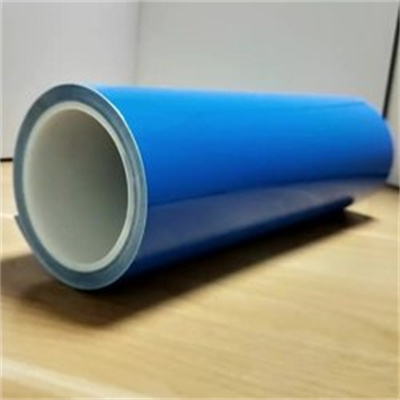
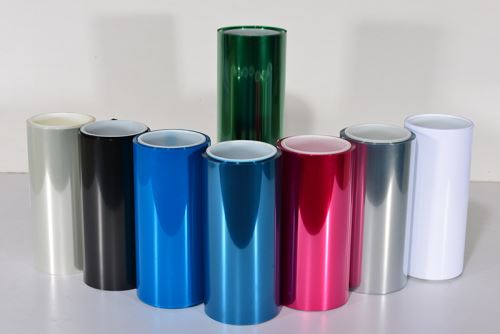
PET release film is a commonly used material for thermal transfer printing. The substrate is PET, which is coated with silicone oil, so it is also called silicone oil film. Conventional thickness from 12um to 100um. There are hot and cold tearing and matte surfaces. After anti-static and anti-scratch treatment, the product has good adsorption and fit.
PET release film is a commonly used material for thermal transfer printing. The substrate is PET, which is coated with silicone oil, so it is also called silicone oil film. Conventional thickness from 12um to 100um. There are hot and cold tearing and matte surfaces. After anti-static and anti-scratch treatment, the product has good adsorption and fit.
Release film performance:
1. There is no migration phenomenon, eliminating the danger of the silicone release film being transferred to the material to which it is attached;
2. The tolerance of the unit area weight of the single-sided or double-sided coating of the release film is very small;
3. The base film has excellent mechanical strength and chemical properties;
4. It has high stability under extreme weather conditions, and the high temperature resistance can reach about 130C for a long time, and it can reach about 180C in 1 hour:
5. Longer storage period;
6. Adhesive-based release PET can be divided into light peeling, medium peeling and heavy peeling according to the mobility of silicon and the change of peeling force after heating. The peeling force can be controlled according to the requirements, and the heat resistance is good.
There are different thicknesses of the release film for customers to choose from. General application thickness: 12UM/19UM/25UM/30UM/36UM/38UM/50UM/75UM/100UM.The products are divided into light, medium and heavy release types. Different release types The force is suitable for laminating tapes or films of different viscosities
Application:
PET film is used in IT electronics, semiconductors, home appliance manufacturing, printing, packaging, insulation, flexible circuit printing, display screensaver PET, membrane switches, film windows, printing films, imposition bases, self-adhesive backing paper, gluing, coating Silicon, used in all kinds of release, bonding, film, silicon chemistry, fluorine chemistry, non-woven fiber, surface treatment, optics, microstructure surface, precision coating, motor gasket, cable tape, instrument panel, capacitor insulation, Furniture peeling film, window film and other industries
Specific uses of release films of different materials
HDPE (low pressure polyethylene) single-sided release film: used for sealing tape, waterproof membrane, etc.
LDPE (high pressure polyethylene) single-sided isolation film: used for self-adhesive waterproof membranes, anti-corrosion materials, sanitary care products, etc., with different colors such as white and gray.
Sunscreen film: HDPE silver coated film waterproof membrane mask, with excellent sun protection and cooling effect, excellent roof construction performance.
Red/green PE double-sided release film: for foam tape.
PET (stretched polyester) single and double-sided release film: used for adhesive protection of advertising inkjet materials, adhesive protection of reflective materials, waterproof membranes, etc.
PET air-plastic release film: widely used in the compounding of silicone-based tapes; PET green high-temperature tape covered with PET fluoroplastic release film has a good release effect; die-cutting and punching and other purposes.
About the protective film production process and the equipment used due to the type of adhesive
The production process of the protective film is different from the types and types of substances used by the equipment used. Generally, it includes: glue, coating, drying, rolling, dividing, packaging and other processes.
The so-called coating process of protective film and adhesive refers to the process in which a specially designed coating machine uniformly coats the adhesive on the substrate. In order to produce high -quality protective film products, in addition to choosing appropriate adhesives, substrates, primer, and isolation agent materials, the most important thing is the most appropriate coating process for the corresponding equipment. The design principle is not only to ensure the thickness of the thickness of the glue layer and the appearance of the protective film, but also to obtain a higher coating operation speed to achieve absolute safety and reliability. The key to the production protective film is to select the appropriate coating method and coating machine according to the specific requirements of the protective film, and to determine various process parameters that the coating machine operates.
The viscosity and other rheological properties of the protective film adhesive are the most important properties affecting the coating behavior of the protective film. According to the dependence of the viscosity on the shear rate, the fluid can be divided into three types: Newtonian fluid, swelling body and pseudoplastic body. The change of shear time, the fluid is divided into Newtonian fluid, thixotropic body and rheological body. The larger the rheological property of the adhesive deviates from the Newtonian fluid, the more prone to various quality problems in the coating operation, especially when When the adhesive exhibits the properties of an expanding body, since its viscosity will increase rapidly with the increase of the coating speed during the coating process, it is necessary to use a larger mechanical force to spread the adhesive, so the faster the coating speed, the more difficult it is to obtain uniformity. When the adhesive is thixotropic, the leveling property of the adhesive layer during coating is very poor, so it is difficult to obtain a smooth and smooth coating. Adhesive layer.
When the viscosity of solvent-based pressure-sensitive adhesive is small, its rheological properties are close to that of Newtonian fluid. When the viscosity is large, it generally behaves as a pseudoplastic and a rheological body. In addition to the viscosity of the glue, it is easy to use a solvent as needed. to adjust. Therefore, the coating technology of solvent-based adhesives is generally easier to master. The protective film plastic company uses an indulgent type adhesive, so the quality of the product is relatively higher than that produced by other adhesives. For cross-linked indulgent adhesives, if the polymer is partially cross-linked before coating, it will bring great difficulties to the coating operation. Small pieces, making production impossible.
The coating performance of emulsion-type pressure-sensitive adhesives is relatively complex, so its coating technology is not easy to master, and various problems often occur during the coating process.
The drying process of the protective film adhesive refers to the process of volatilizing the solvent or water in the adhesive layer coated on the substrate to cure the adhesive. Since solvent or water evaporation always takes a certain amount of time, drying is usually the slowest step in the production process of protective films. The drying speed not only determines the production speed but also greatly affects the quality of the product.
Related News
High Quality and Best Price Polyester Pet Film
PET film is a kind of packaging film with comprehensive performance. It has good transparency [...]
Related Products